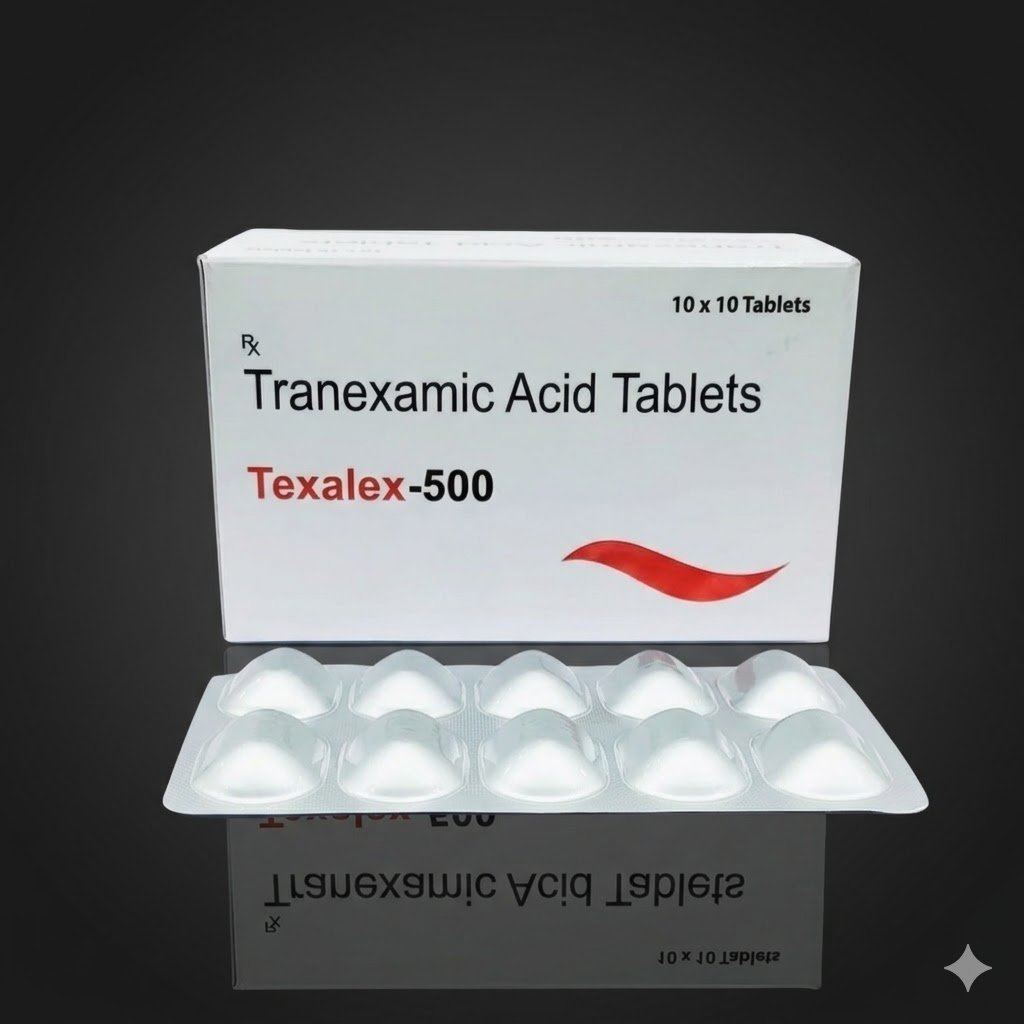
An IP-standard antifibrinolytic tablet (500mg) indicated for the effective control of heavy menstrual bleeding (menorrhagia) and excessive post-surgical hemorrhage. It works by competitively inhibiting plasminogen activation to stabilize blood clots and reduce localized blood loss without affecting system-wide hormonal levels.
₹1.00
Inclusive of all taxes · MRP is per strip
Easy Return
Secure payments & cash on delivery
Tranexamic Acid Tablets IP — 500mg
Tranexamic Acid Tablets IP deliver a precise 500mg dose of pure tranexamic acid, manufactured in strict accordance with Indian Pharmacopoeia standards. As a potent antifibrinolytic agent, this medication is widely prescribed to manage, control, and prevent excessive bleeding in gynecological, surgical, and traumatic conditions without altering normal hormonal balances.
Key Clinical Benefits & Indications
Menorrhagia Control: Significantly reduces heavy menstrual blood loss due to dysfunctional uterine bleeding ($DUB$), improving daily comfort during cycles.
Surgical & Trauma Hemostasis: Controls or prevents severe blood loss during high-risk surgeries (such as orthopedic or dental procedures) and managing acute epistaxis (nosebleeds).
Clot Stabilization: Competitively inhibits the activation of plasminogen to plasmin, preventing the breakdown of fibrin clots (fibrinolysis) to effectively halt localized hemorrhaging.
Product Specifications
Attribute
Specification
Active Ingredient
Tranexamic Acid IP (500mg)
Therapeutic Class
Antifibrinolytic Agent
Dosage Form / Pack
Film-Coated Tablet
Storage Conditions
Store below 30°C in a cool, dry place. Protect from light and moisture.
Dosage & Safety Alert
📋 Usage Guideline: For heavy periods, tablets are taken only during active bleeding days (typically 1–2 tablets, 3 times daily for a maximum of 4 days) or as directed by a healthcare professional. Swallow whole with water.
⚠️ Contraindications: Strictly contraindicated in patients with a history of thromboembolic diseases (such as deep vein thrombosis, pulmonary embolism, or stroke). Use with extreme caution and reduced dosages in patients with renal impairment.
 PAN India Delivery
 Save up to 90% with Generic Medicines
 +91-9300090100